Home / Blog / Freezer Electronic Shelf Labels
Freezer Electronic Shelf Labels: Built for Sub-Zero Aisles & High Humidity in the Philippines
Quick Technical Summary
Do electronic shelf labels work inside sub-zero supermarket freezers? Yes. Commercial freezer-rated electronic shelf labels use specialized low-temperature e-ink fluid, cold-resistant battery cells, and moisture-sealed casings that operate reliably down to -25°C without freezing, cracking, or losing display contrast.
Why do paper price tags fail in Philippine chillers? Tropical store humidity mixed with cold display air creates constant condensation. Standard cardstock curls, thermal ink fades, and adhesive strips peel off within days—causing missing prices and compliance risks at checkout.
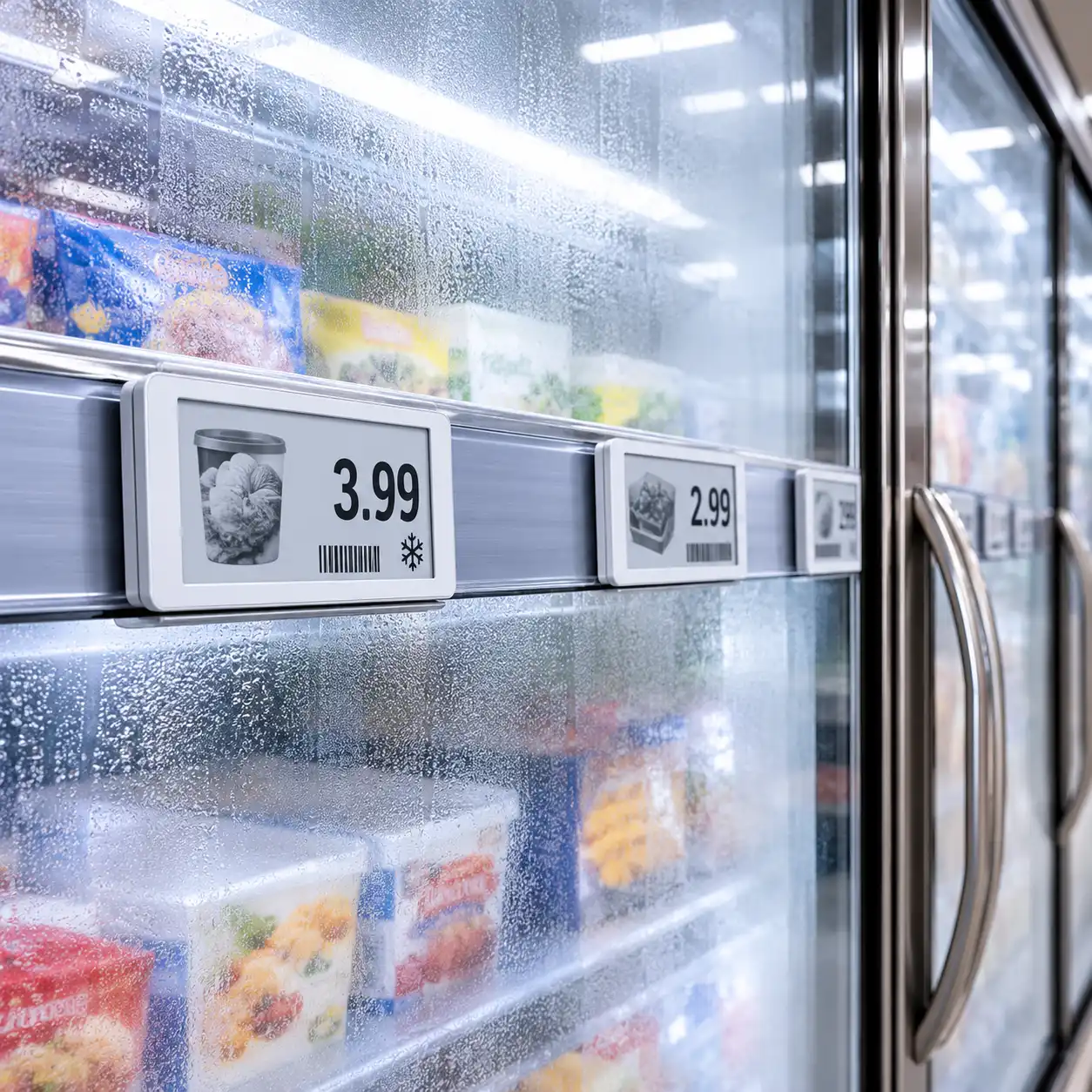
Walk down the frozen meat or ice cream aisle of almost any grocery store in the Philippines, and you will notice the same recurring mess: curled paper inserts, soggy cardboard strips, faded ink, and plastic price rails stained by condensation.
Keeping accurate price tags inside cold aisles is hard enough in dry climates. In the Philippines, warm, humid store air hits freezing chiller air every single time a customer opens a glass door. Within days, standard paper labels absorb moisture, lose their glue, or drop behind frozen packages.
When store managers consider switching to electronic shelf labels, one of their biggest concerns is simple: “Will digital screens crack, fog up, or die inside a -20°C freezer?”
Standard consumer screens do fail in the cold. However, purpose-built freezer electronic shelf labels are engineered specifically for sub-zero temperatures and wet, humid retail aisles.
Why Tropical Humidity Destroys Paper Tags in Cold Aisles
Before looking at the hardware, it helps to see why paper labeling breaks down fastest in refrigerated sections—and why those failures cost supermarkets more than just replacement paper.
1. Condensation Turns Cardstock Into Mush
Every time a shopper reaches into an open-top meat chest or swings open a beverage cooler in Metro Manila or Cebu, humid air condenses directly onto the cold metal shelf lip. Regular cardstock wicks up that water like a sponge. The paper swells, warps out of the plastic rail, and eventually drops onto the floor.
2. Fading Ink and Unreadable Prices
Many stores use thermal adhesive stickers for frozen poultry, hotdogs, and deli meats. Cold moisture and harsh LED chiller lights cause thermal ink to fade quickly. When a shopper cannot read the price of a frozen pack, they either leave it in the wrong aisle or bring it to the register—slowing down checkout lines.
3. Adhesive Failure and DTI Compliance Risks
Regular tape and sticker glue harden and snap at freezing temperatures. Missing or illegible prices on cold-case items put stores at direct risk under the DTI Price Tag Law (Republic Act No. 7394), which requires clear, visible pricing on every retail product.
How Sub-Zero Electronic Shelf Labels Handle -25°C
If you put a normal smartphone or consumer e-reader inside a deep freezer, the battery drains rapidly and the screen slows to a crawl. Commercial freezer ESL tags solve those limits with three specific engineering changes:
- Low-Temperature E-Ink Microcapsules: Inside an e-paper screen, tiny black and white pigment particles float in fluid. Freezer-rated models use a thinner, low-viscosity fluid formulated to keep those particles moving smoothly even at -25°C, so prices refresh cleanly without ghosting or screen lag.
- Cold-Rated Battery Chemistry: Standard coin-cell batteries lose voltage sharply in freezing air. Sub-zero ESL tags use industrial lithium cells designed to hold steady power in cold storage, giving years of dependable operation.
- Moisture-Sealed Polycarbonate Housings: To stop internal condensation and protect circuits during routine chiller wash-downs, freezer labels feature tightly sealed enclosures rated against water spray and frost buildup.
| Performance Factor | Paper & Stickers | Standard Ambient ESL | Freezer-Rated ESL |
|---|---|---|---|
| Safe Operating Range | Warps in damp cold air | 0°C to +40°C (Dry aisles & chillers) | -25°C to +10°C (Deep freezers) |
| Condensation & Frost | Swells, curls, ink smudges | Protected against light dampness | Sealed housing blocks frost & spray |
| Readability Behind Glass | Fades under chiller LEDs | 180° glare-free contrast | 180° high contrast without glare |
| Replacement Cycle | Replaced weekly or monthly | Up to 10 years | 5 to 7+ years in sub-zero cases |
Where Cold-Rated ESL Works Best in Philippine Retail
Because different store layouts use different kinds of refrigeration, matching the right tag and bracket matters just as much as the screen itself:
1. Supermarket Meat, Poultry & Frozen Aisles
Supermarkets run frequent end-of-day markdowns on chilled pork, chicken cuts, and seafood trays to move fresh stock before closing. Instead of sending a butcher or clerk out with a hand-held pricing gun in wet gloves, managers push price drops from the back office straight to the cold display. Learn more on our supermarkets solution page.
2. Convenience Store Drink Coolers & Ice Cream Chests
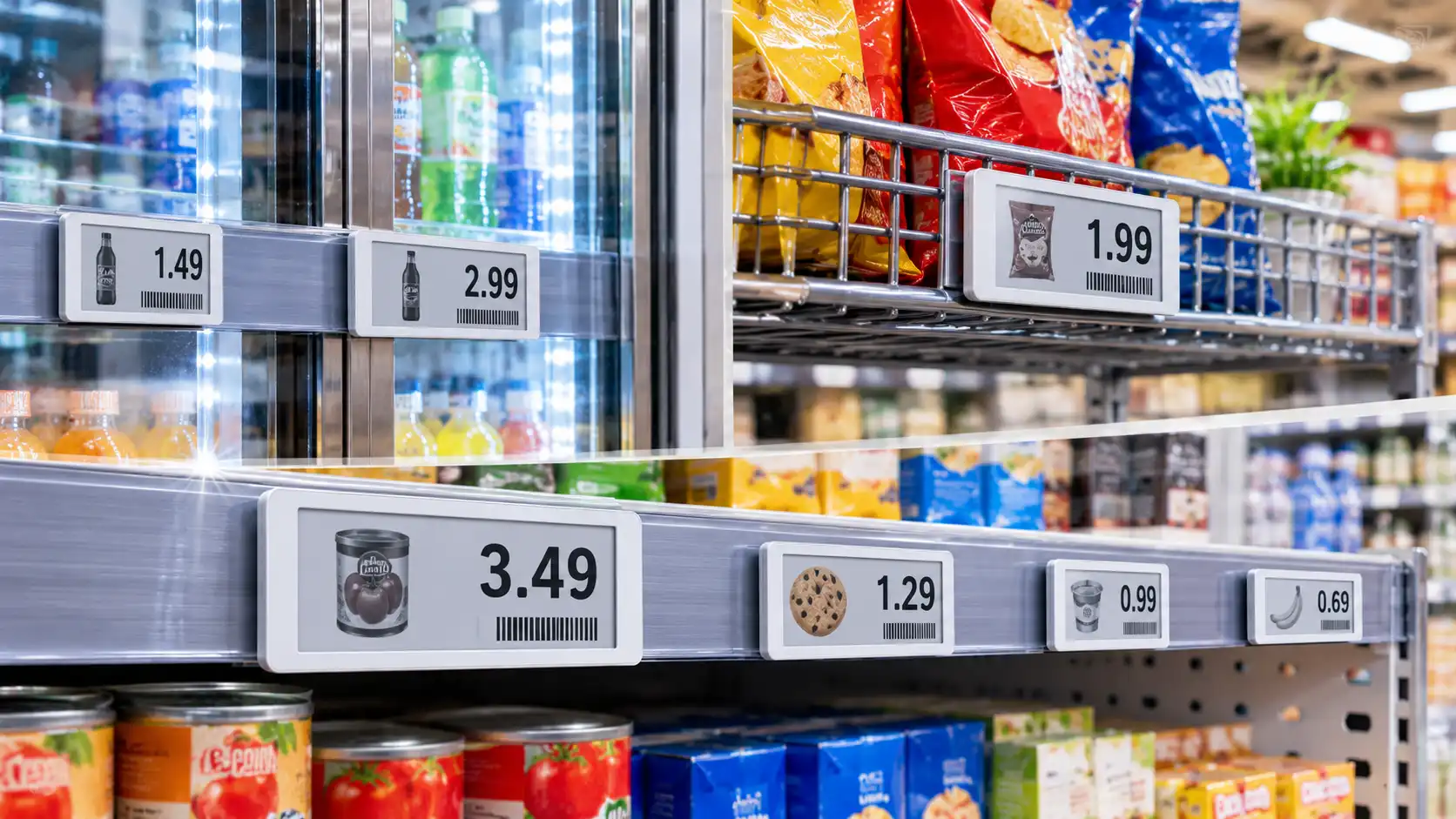
Neighborhood mini-marts pack dozens of beverage brands onto narrow wire racks inside glass-door chillers. Slimline e-paper tags clip straight onto wire shelves without blocking cans or bottles, letting chains run instant beer bundles or cold-drink promos across branches. See how small-format teams use them on our convenience stores page.
3. Cold-Chain Storage & Walk-In Warehouses
Inside commercial cold-storage warehouses, printing and sticking paper bin labels while wearing thick freezer gloves wastes hours every week. Industrial digital tags with bright pick-to-light LEDs flash directly from the shelf rack so warehouse pickers locate frozen pallets fast and get out of the cold sooner. Explore more applications across our ESL solutions directory.
Do wireless signals pass through thick glass freezer doors?
Yes. Our enterprise wireless communicators broadcast on Sub-GHz and encrypted BLE radio frequencies that pass cleanly through commercial double-pane chiller glass and reach deep inside open frozen island cases—without installing wires or extra antennas inside the refrigerator.
3 Practical Checks Before Buying Freezer ESL Tags
Not every shelf in a store needs expensive sub-zero hardware. Smart retailers save money by matching the tag rating to the exact aisle temperature:
- Separate Your Chiller Zones (0°C to 4°C) From Deep Freezers (-18°C to -25°C): Beverage doors, dairy shelves, and fresh vegetable misting racks stay above 0°C. Standard Aura Aeon or Chroma Aeon tags work cleanly in those zones. Reserve dedicated freezer-rated tags strictly for sub-zero ice cream and frozen meat cabinets.
- Inspect Your Shelf Clips & Wire Racks: Measure the thickness of your glass chiller shelves and metal wire baskets. Using proper polycarbonate snap-on brackets keeps tags locked securely even when heavy meat trays slide past them.
- Test Live Samples Inside Your Coldest Chest: Before ordering for an entire chain, place 5 to 10 sample tags inside your coldest working freezer for two weeks, trigger daily price changes, and check readability through condensation.
When you pair durable cold-aisle hardware with automated POS synchronization, you stop replacing soggy paper labels every week and boost your overall electronic shelf labels ROI. You can also estimate your branch savings using our ROI savings calculator or browse our full ESL product lineup.
Test Freezer-Rated ESL Tags in Your Own Cold Cases
Visit our Makati City demonstration facility or request sample tags and cooler brackets to test inside your supermarket chillers and freezers.

Written by ESL Philippines Solutions Engineering
Specialists in wireless e-paper network architecture, retail POS integration, and automated store operations based in Poblacion, Makati City.