Home / Blog / DTI Price Tag Law Compliance
DTI Price Tag Law Compliance: How Electronic Shelf Labels Eliminate Checkout Discrepancies in the Philippines
RETAIL OPERATIONS & LAW • By ESL Technical Integration Team • 7 min read • Makati City, Philippines
Quick Executive Summary
What is the primary retail compliance risk in the Philippines? Under Republic Act No. 7394 (The Consumer Act of the Philippines), retailers are legally bound to sell goods at the displayed shelf price or lower. Discrepancies between printed paper tags and point-of-sale (POS) barcode scanners result in formal consumer complaints, mandatory mediation, and statutory administrative fines enforced by the Department of Trade and Industry (DTI).
How do electronic shelf labels (ESL) solve this? Centralized ESL systems bind physical e-paper shelf displays directly to the store’s central database via wireless radio frequency (RF) networks. When a price adjusts in the enterprise resource planning (ERP) or POS engine, digital tags update in sub-minute cycles, guaranteeing absolute price parity and zero manual label maintenance.
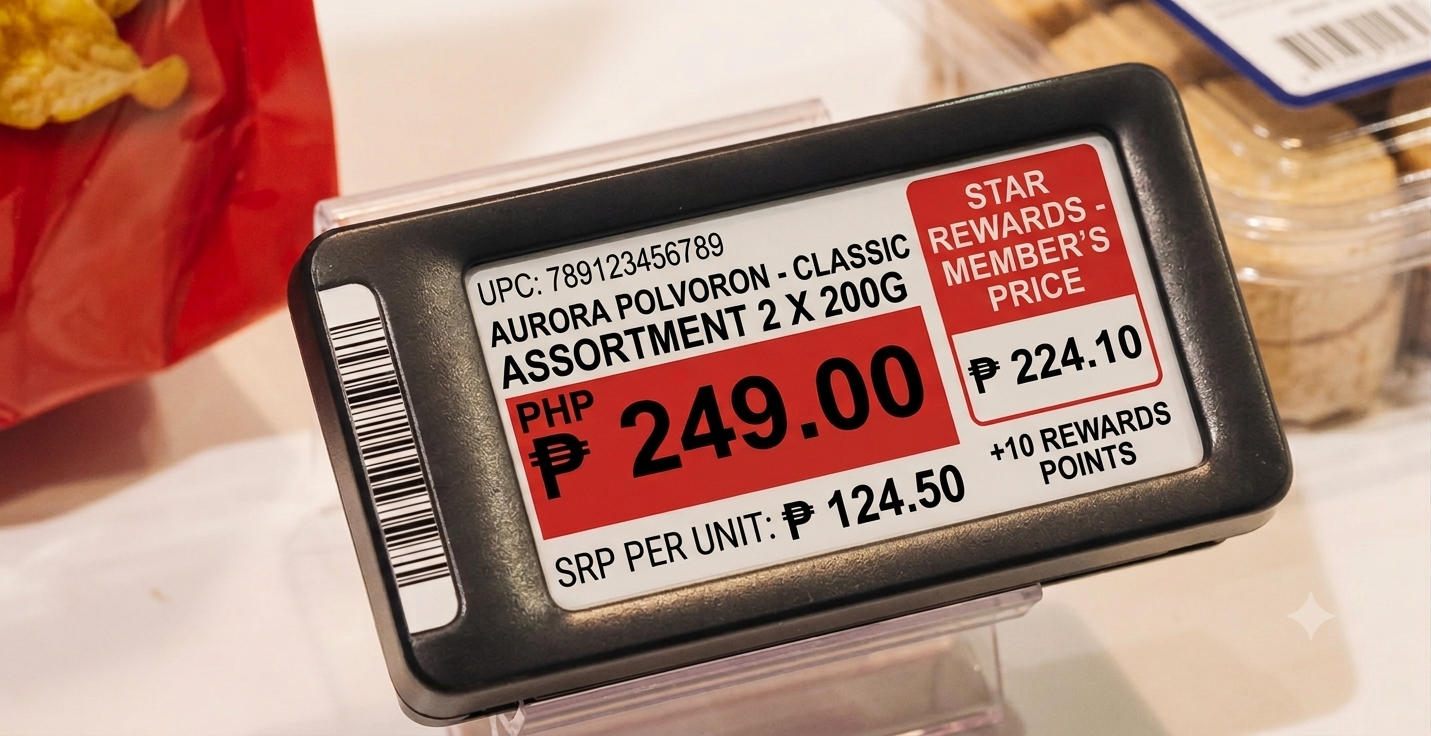
Physical store operations across the Philippines operate under challenging merchandising dynamics. High consumer inflation, aggressive multi-buy campaigns, flash discounts, and weekly fast-moving consumer goods (FMCG) co-op campaigns require stores to modify thousands of shelf-edge prices weekly. For retail chains running on legacy systems, every single adjustment relies on manual labor: printing paper shelf-talkers, cutting sheets by hand, sorting them by aisle, and sliding strips into plastic channels.
This manual workflow is not merely inefficient; it is a major operational vulnerability. In high-density supermarkets, neighborhood mini-marts, and chain dispensaries, store associates often fail to update physical labels before register databases refresh. The result is price mismatching at checkout—the exact trigger for punitive consumer complaints under the Department of Trade and Industry (DTI).
To eliminate this systemic risk, retail operators across Luzon, Visayas, and Mindanao are transitioning to electronic shelf labels in the Philippines. Centralized e-paper pricing systems eliminate manual error margins, securing automated compliance across regional and national branch networks.
Understanding Republic Act No. 7394 and the DTI Price Tag Mandate
Retail commerce in the Philippines is strictly governed by Republic Act No. 7394, commonly known as the Consumer Act of the Philippines. Under Article 81 (Price Tag Requirement) and reinforcing administrative orders enforced by the DTI’s Fair Trade Enforcement Bureau (FTEB), retailers must visibly display the price of every consumer product offered for retail sale.
The statute enforces two rigid operational principles:
- Mandatory Price Disclosure: Goods cannot be sold without an unambiguous price tag, label, or digital indicator clearly visible to the shopper.
- The Lower-Price Rule: If there is a discrepancy between the shelf-edge price tag and the amount calculated by the cashier’s barcode terminal, the merchant is legally obligated to honor the lower of the two figures.
When discrepancies occur systematically, retailers face more than just margin loss from markdown adjustments. Formal consumer filings submitted to DTI Consumer Protection divisions trigger administrative summons, investigative audits, and recurring statutory fines. In severe instances of recurring deceptive pricing, chains risk suspension of local business permits from host Local Government Units (LGUs).
The Structural Failure of Paper Price Labeling
Retail executives often attribute checkout pricing disputes to associate carelessness. However, time-motion studies across commercial retail show that paper tag systems fail due to structural limits rather than human negligence:
1. High SKU Density vs. Lean Store Staffing
A typical commercial hypermarket or grocery branch in the Philippines manages between 15,000 and 35,000 active stock-keeping units (SKUs). When supplier cost adjustments or weekend sales launch, a store must replace 2,000 to 5,000 physical tags within hours. In contrast, modern retail stores operate on tight shifts where store associates prioritize cashier operation, security oversight, and shelf restocking. Replacing thousands of paper tags manually on schedule is virtually impossible with lean staffing.
2. Unsynchronized Batch Updating
POS databases update instantly via software pushes scheduled at midnight or shift changeovers. Conversely, physical paper tag replacement takes anywhere from 8 to 24 human hours. This gap creates an unavoidable “window of liability” where the register registers the new price while the physical shelf displays the expired promotional figure.
3. Environmental Wear and Tag Dislodgement
In humid store aisles, refrigerated coolers, and sub-zero freezer cabinets, paper labels wrinkle, curl, or fall out of rail channels due to condensation. Damaged or missing paper tags breach DTI display requirements even if POS pricing is accurate.
How Centralized ESL Systems Guarantee POS-to-Shelf Price Parity
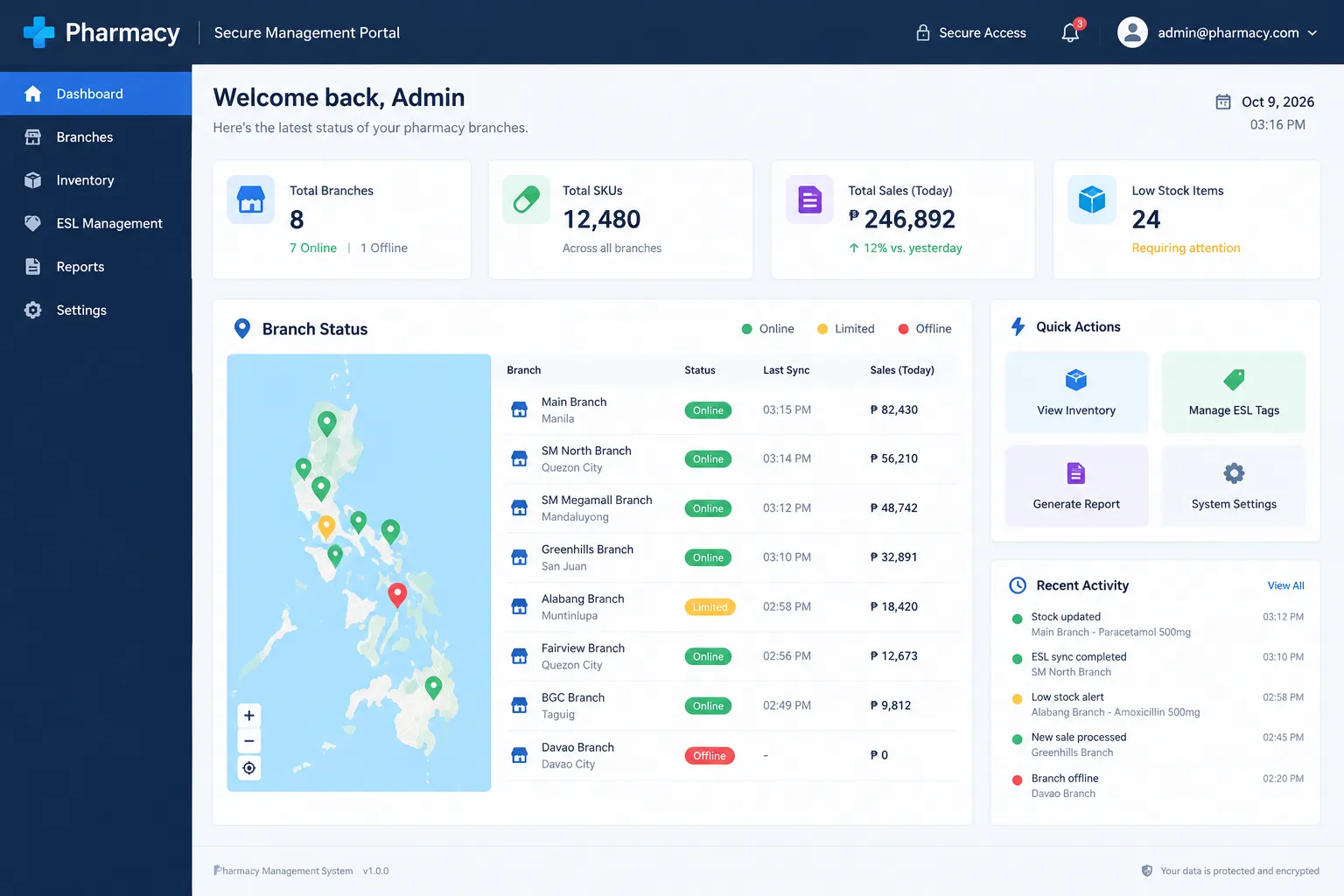
An enterprise ESL system replaces static paper inserts with ultra-low-power, bistable electronic ink displays mounted directly to shelf-edge extrusions. Instead of requiring manual replacement by store staff, digital tags communicate over low-latency, encrypted radio frequencies (Sub-GHz or proprietary BLE mesh) with a ceiling-mounted transceiver.
The Operational Closed Loop:
When your central ERP or POS database changes a price, the update is broadcast to the in-store transceiver and transmitted to the shelf tag in under 60 seconds. The label changes its display and immediately transmits an acknowledgement receipt back to headquarters. If an individual label suffers physical obstruction or hardware issues, the management console flags the anomaly instantly.
This closed-loop system provides three fundamental protections against DTI compliance risks:
- Simultaneous Price Execution: Register scanners and shelf-edge labels update synchronously. There is zero latency between what your cashier charges and what the consumer sees.
- Audit-Ready Proof of Display: Two-way RF handshakes allow corporate legal and operations teams to pull digital timestamps showing the exact second each label refreshed, proving compliance during regulatory inquiries.
- Total Pricing Immunity for Lean Store Crews: Neighborhood formats like mini-marts and boutique pharmacies can execute daily promotions, dynamic markdowns, and midnight bundle campaigns with zero on-site staff intervention. Learn more about small-format applications in our guide to electronic shelf labels for convenience stores and mini marts.
Industry-Specific Compliance Applications in the Philippines
Compliance challenges differ significantly by commercial format. Centralized digital price tags solve the unique regulatory hurdles faced by different retail sectors:
1. Supermarkets and High-Velocity Groceries
Supermarkets frequently adjust pricing on perishable goods—such as produce, bakery products, and chilled meats—to minimize shrink before expiration. Manually pasting discount stickers is messy and often delayed. With high-density electronic displays, managers trigger automated, graduated markdowns throughout the day. Furthermore, cold-rated tags operate down to -25°C without screen degradation, keeping dairy and frozen goods compliant. Explore this architecture in our breakdown of electronic shelf labels for supermarkets and grocery stores.
2. Retail Pharmacies and Healthcare Dispensaries
Philippine pharmacies must comply with Department of Health (DOH) maximum drug retail prices (MDRP) and clearly display generic molecule names alongside branded alternatives. High-contrast monochrome displays, such as the Aura Aeon Series, present crisp, high-resolution text and compliance badges across a full 180° viewing angle, keeping dispensaries compliant under intense regulatory scrutiny.
3. Multi-Branch Franchise Operations
For nationwide chains spanning multiple islands, decentralized store-level pricing risks brand equity and regulatory standing. Our zero-store-server architecture lets headquarters in Metro Manila deploy unified national campaigns or localized regional tier pricing to branches across Cebu, Iloilo, and Davao simultaneously without local server overhead. Review our central hardware controller on the enterprise wireless communicators specification page.
Measuring Financial Return: Beyond Fines and Legal Protection
While eliminating DTI fines and customer checkout disputes protects brand reputation, the capital expenditure of an ESL deployment delivers direct financial returns. Philippine retail enterprises achieve hardware payback rapidly through two primary drivers:
| Cost Factor | Conventional Paper Workflow | Automated Enterprise ESL |
|---|---|---|
| Labor Allocation | 15–30 hours per week per branch spent printing, cutting, sorting, and inserting paper tags. | Zero hours. Price adjustments push instantly from head office or central POS triggers. |
| Material Consumables | Continuous expense on specialty card stock, color printer toner, plastic shelf rails, and adhesive rolls. | Zero paper consumption. Displays use bi-stable e-paper powered by 10-year replaceable batteries. |
| Checkout Discrepancy Rate | Estimated 2% to 5% label error rate due to missed shifts, dislodged tags, or manual sorting mistakes. | 0.00% discrepancy between register scanners and physical shelf edges. |
By reallocating store labor away from manual labeling and back toward customer service and fast inventory replenishment, retailers eliminate paper waste and improve sales margins. You can calculate the exact payback timeline for your store footprint using our retail ROI savings calculator.
Summary: Building a Compliant, Future-Proof Retail Floor
Relying on paper tags in a modern multi-branch retail network creates ongoing operational and legal risks. The Department of Trade and Industry’s Price Tag Law exists to protect consumer transparency; retailers who lack the technical capability to synchronize shelf and register prices bear substantial compliance and labor costs.
Modernizing your stores with industrial-grade electronic shelf labels eliminates price discrepancies, streamlines branch workflows, and protects your margins across every aisle.
Ready to Modernize Your Shelf-Edge Operations?
Connect with our retail automation team in Makati to review hardware mockups, POS integration steps, and an on-site branch pilot rollout.

Written by ESL Philippines Solutions Engineering
Specialists in wireless e-paper network architecture, retail POS integration, and automated store operations based in Poblacion, Makati City.